






Handheld Ultrasound Comparison: Wireless Probe Brands Side by Side
- 2026-10-29
- 82
- Guangzhou Sonostar Technologies Co., Limited
Comparing handheld ultrasound brands is harder than comparing most medical devices, because the products are not built on the same commercial model. One probe is sold cheaply with a software membership attached. Another costs more up front and includes everything. A third is a transducer that plugs into an ecosystem you may already own. Comparing sticker prices across those models tells you nothing. This page puts them on the same eight dimensions and, more usefully, says who each brand suits. For the fundamentals behind the specifications, see the handheld ultrasound buyer's guide.
The eight dimensions worth comparing
Everything else on a datasheet is downstream of these eight. Compare brands on the same eight rows and the decision usually resolves itself.
Array type and count. Convex, linear, phased, or a 3-in-1 — and how many in one housing. Determines which questions you can answer at all.
Elements and channels. The most predictive specification for image detail. Ask for both numbers.
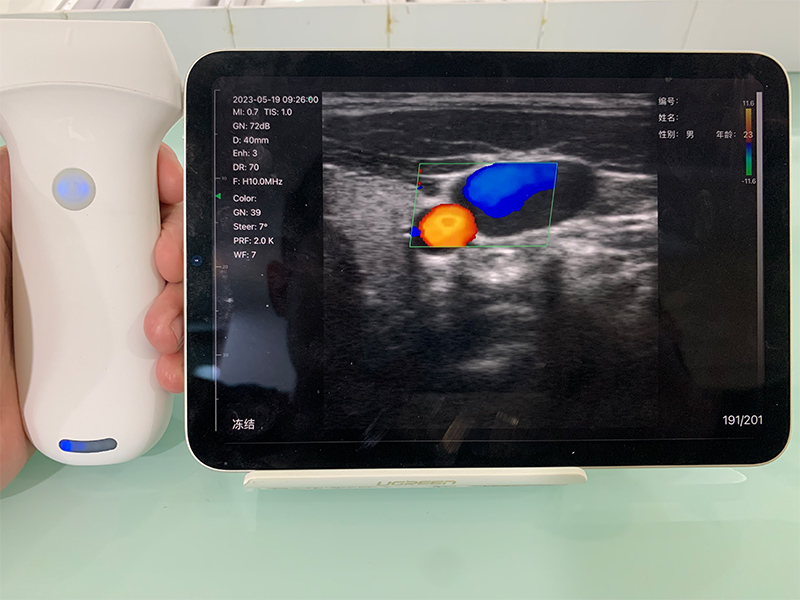
Doppler modes. Colour, power (PDI), and spectral PW. PW is required for flow and cardiac work.
Software model. Perpetual with the device, or an annual membership — and what the membership gates.
Platform support. Which iOS, Android, and Windows versions, and the specific device list.
Storage, export, and DICOM. How images reach the record, and whether that path is licensed separately.
Certifications. FDA clearance, CE marking, ISO 13485 — the actual numbers, not a claim.
Warranty, service, and probe replacement. What happens in year three, and what a replacement costs.
The comparison at a glance
| Brand / system | Array approach | Connection | Software model | Public price reference | Best for |
|---|---|---|---|---|---|
| Butterfly iQ3 | Single wide-band semiconductor probe | Wireless | Membership tiers | ~$5,394–$5,999 with multi-year software; Core ~$299/yr, Advanced ~$420/yr | Whole-body coverage from one probe; institutions wanting cloud and AI tooling |
| Clarius HD3 / PAL HD3 | Dedicated wireless probes per specialty | Wireless | Membership for some features | ~$7,895–$8,870 | Specialty clinics that scan one region at high volume |
| Philips Lumify | Separate dedicated transducers | Wired to host device | Quotation-controlled | ~$36,083 for a multi-transducer configuration (highly configuration-dependent) | Facilities standardised on Philips infrastructure |
| GE Vscan Air | Dual-probe (sector + linear) or CL | Wireless | Innovations ~$500/yr or ~$1,299/3 yr | Quote-dependent | Hospital buyers wanting a large-vendor service network |
| Mindray TE Air | Linear and convex formats | Wireless | Positioned as no subscription | Quote-dependent | Buyers wanting an established imaging brand without recurring fees |
| EchoNous Kosmos | Configuration-based platform | Wireless, tablet-forward | Configuration-based | From ~$7,700 | Advanced Doppler and AI-assisted workflow |
| Exo Iris | Wide-band probe | Wireless | Ecosystem model | Quote-dependent | Organisations prioritising AI workflow and documentation |
| Vave Universal | Single-probe family | Wireless | Varies by region | Budget-oriented; verify availability | Budget-conscious buyers who can verify local support |
| SonoStar | Convex, linear, phased, micro-convex, endocavity, biplane, 3-in-1, 4D | Wireless | No recurring software fee | Factory-direct; quoted against specification, configuration, and quantity | Buyers who want array breadth and predictable five-year cost |
Figures are public US reference pricing from third-party buyer guides reviewed August 2026. Taxes, promotions, institutional discounts, accessories, regional pricing, and distributor quotes all change the final amount. Confirm current terms with each manufacturer.
Brand by brand: who each one is for, and who it is not for
Butterfly iQ3
What it is. A single semiconductor ("ultrasound-on-chip") probe covering a wide frequency range, sold with tiered software membership.
Best for buyers who want one probe to attempt nearly every scan type, and institutions that will actually use cloud storage, AI measurement, and fleet management.
Not the best for buyers who want a fixed, predictable five-year cost, or who need maximum performance in one specific specialty — a dedicated probe will outperform a wide-band one in its home application.
Clarius HD3
What it is. A family of dedicated wireless probes — convex, linear, phased — each optimised for its application.
Best for specialty clinics where most scans fall in one domain: a dedicated linear scanner for MSK and vascular work, or phased for cardiac.
Not the best for a mixed clinic needing one device for many departments — you would be buying and carrying several probes.
Philips Lumify
What it is. App-based ultrasound using separate dedicated transducers, wired to a compatible host device.
Best for facilities already invested in Philips infrastructure who value the wired workflow and vendor continuity.
Not the best for budget-constrained buyers — published reference pricing for multi-transducer configurations is substantially higher than wireless alternatives — or anyone who needs cable-free movement.
GE Vscan Air
What it is. A wireless dual-probe system (sector and linear, or curved and linear depending on variant) from a large imaging vendor.
Best for hospital buyers who want a major vendor's service network, warranty structure, and procurement familiarity.
Not the best for buyers who object to recurring software fees, or small clinics that will not use the enterprise service layer they are paying for.
Mindray TE Air
What it is. Wireless probes in linear and convex formats from an established imaging manufacturer, positioned without a subscription.
Best for buyers who want a recognised imaging brand and no recurring software cost.
Not the best for buyers needing phased array cardiac capability in the same device family — check the current array lineup for your use case.
EchoNous Kosmos
What it is. A configuration-based platform with an emphasis on Doppler quality and AI-assisted acquisition, delivered in a tablet-forward form factor.
Best for programmes where Doppler performance and guided acquisition are the priority.
Not the best for buyers who want a pocket-sized phone-based workflow, or who are working to a tight capital budget.
Exo Iris
What it is. A wireless wide-band probe inside a broader AI and documentation ecosystem.
Best for organisations building standardised programmes where documentation workflow and AI assistance matter as much as the image.
Not the best for a single clinic that simply needs a probe — the ecosystem value is largely institutional.
SonoStar
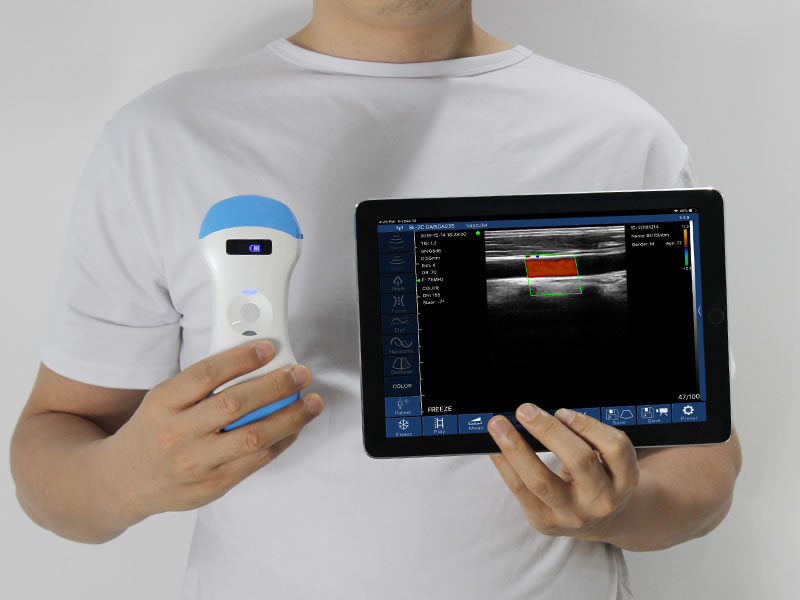
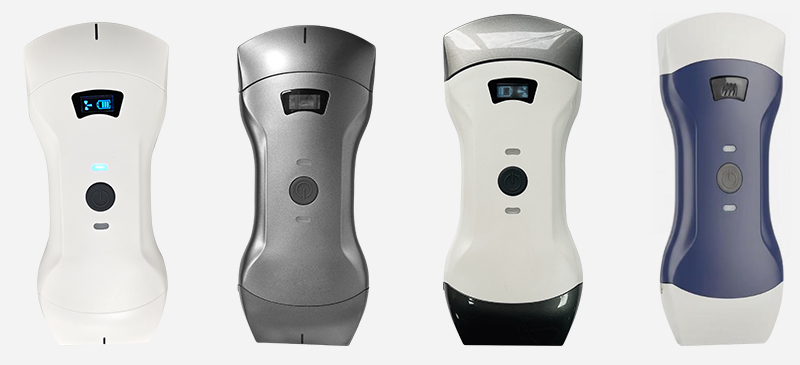
What it is. A manufacturer-direct range of wireless probes: convex, linear, phased, micro-convex, endocavity, biplane, 3-in-1, and 4D configurations, plus a 4D wireless bladder scanner line.
Best for buyers who want array breadth, predictable multi-year cost, and factory-direct pricing — particularly mixed-use clinics, emergency settings, veterinary practice, and distributors.
Not the best for institutions whose decision rests on institutional AI tooling, cloud credentialing, or multi-site QA infrastructure. The brand ecosystem is smaller than the largest global names, and that is a genuine limitation rather than a talking point.
Relevant models: 8CPL 3-in-1, 8C convex, 8L linear, 5PA phased array.
The subscription question, stated fairly
It would be easy to frame recurring fees as a trap. That would be wrong.
A subscription buys real things: continuous software updates, cloud storage with versioning, AI measurement tools, tele-ultrasound, and centralised fleet management. For a hospital group running a credentialing and QA programme across sites, those are not extras — they are the product.
What makes a subscription poor value is narrower and more common:
Paying for capability you never use. A two-clinician practice rarely needs enterprise fleet management.
Discovering a gated feature late. Cloud storage, DICOM export, or AI tools turning out to sit behind a tier you did not budget for.
Losing access on lapse. Understanding what happens to stored images and functions if a membership is not renewed — ask before buying, not after.
The arithmetic is worked through in how much a handheld ultrasound costs, and the vendor questions to ask in writing are listed in the no-subscription TCO guide.
Choosing by buyer type
| Buyer | Priority | Compare first |
|---|---|---|
| Primary care clinic, mixed caseload | Broad coverage, predictable cost | 3-in-1 wireless probe; no-subscription models |
| Single-specialty clinic (MSK, vascular) | Depth in one application | Dedicated high-spec linear probe |
| Emergency department | Speed, coverage across FAST / cardiac / access | 3-in-1 with full Doppler |
| Cardiac-focused programme | Phased array with spectral Doppler | Dedicated phased probe; verify PW is included |
| Veterinary practice | Animal size range, ruggedness | Convex + linear combination; see the veterinary range |
| Hospital group / multi-site | Standardisation, credentialing, QA | Ecosystem platforms — subscription may be worth it |
| Distributor / OEM | Margin structure, certification, capacity | OEM/ODM options; manufacturer verification |
Wireless probes versus wired app-based transducers
This is a genuine fork, not a spec-sheet detail.
Wireless probes carry beamformer, battery, and transmitter in the housing. Advantage: no cables, easy cleaning, the display device is yours to choose and upgrade. Trade-off: battery-bound sessions and dependence on Wi-Fi conditions.
Wired transducers lean on the host device. Advantage: no wireless latency, no battery in the probe. Trade-off: a cable to manage and sterilise around, and a compatibility list to police.
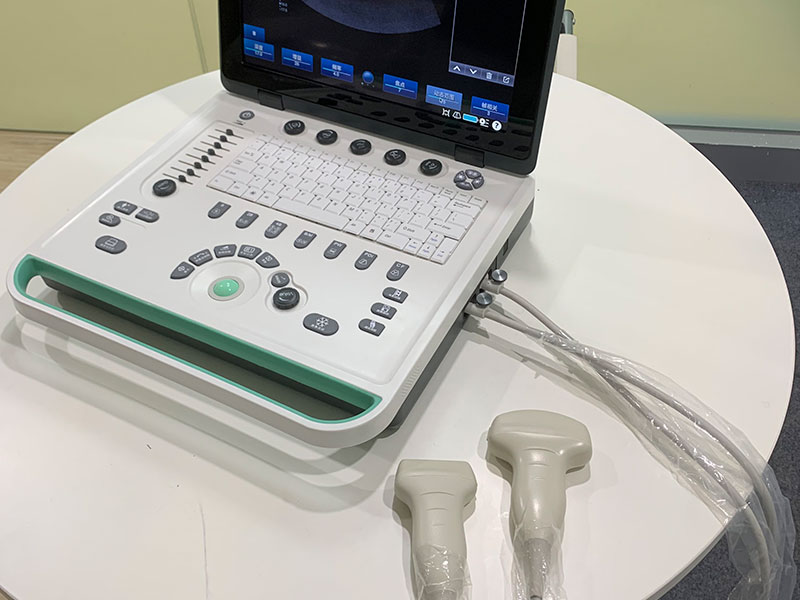
For most point-of-care environments the wireless trade is worth taking — but if you do high-volume interventional work where latency is felt, or you scan in RF-hostile environments, test before committing. Our laptop vs handheld vs cart comparison covers the wider form-factor choice.
Mistakes that make comparisons useless
Comparing sticker prices across different software models. Compare five-year totals, or the comparison is meaningless.
Assuming "Doppler" means spectral Doppler. Colour and PW are different capabilities. Confirm which is included.
Ignoring the device list. "Supports iOS" is not universal iPhone support. Check exact models.
Skipping the export path. An image you cannot get into the record has limited value. Confirm DICOM and export before purchase.
Choosing on brand familiarity. The largest names are not automatically the right fit for a two-room clinic.
How to run your own comparison in an afternoon
List your top three scan types. This fixes the array requirement.
Build one specification sheet with the eight dimensions and send it to every vendor.
Score responses side by side — a vendor who will not answer is telling you something.
Model five-year cost for each, including subscription, warranty, and one replacement probe.
Trial the top two on your own cases, with your own staff, using your common scan types.
Detail on evaluating image quality as a buyer is in the 2026 buyer's guide, and use-case coverage by setting is in which departments use portable ultrasound most.
Get a side-by-side quote for your configuration
Send your scan mix, platform, market, and quantity — and get a factory-direct quote with the software model stated in writing.
Frequently asked questions
Which handheld ultrasound brand is best?
There is no single answer. Match the brand to your scan mix and software preference: Butterfly for one-probe whole-body coverage with a membership, Clarius for specialty depth, Philips for existing Philips sites, GE for large-vendor service, and wireless probe manufacturers for no recurring fee.
Which handheld ultrasound has no subscription fee?
Several wireless probe manufacturers supply software with the device, including SonoStar and Mindray's TE Air line. Butterfly, GE, and Clarius gate some features behind membership. Terms change — request current written terms.
Is a subscription model bad value?
Not necessarily. It buys updates, cloud storage, AI tools, and fleet management that some institutions need. It becomes poor value when you pay for capability you never use, or discover a needed feature is gated.
Can one probe replace multiple transducers?
A convex + linear + phased 3-in-1 covers abdominal, superficial, vascular, and cardiac views — sufficient for most point-of-care use. High-volume specialty departments may still prefer dedicated probes; endocavity and 4D imaging require dedicated hardware. See the 3-in-1 probe guide.
Which is best for vascular access?
A high-frequency linear probe with real-time needle guidance and a small footprint. Confirm needle guidance is included rather than a paid add-on.
Do they work with both iPhone and Android?
Most do, but support is model-specific. Confirm exact device models, OS versions, and whether one licence covers iOS, Android, and Windows.
Competitor pricing, plan details, and specifications are public reference information compiled from third-party buyer guides and manufacturer product pages, reviewed August 2026, and are subject to change. Brand descriptions are general category comparisons for procurement purposes and are not clinical performance claims or endorsements. SonoStar is the manufacturer of this site; its entry is presented with its limitations stated. This article is educational information about medical device procurement, not medical advice. Point-of-care ultrasound requires appropriate training and must follow local licensing, scope-of-practice, and regulatory requirements; confirm current specifications, certifications, clearance, and pricing with each manufacturer before purchase.
- Pre:POCUS in Primary Care and Critical Care: What Changes
- Next:No more

 Home
 Product
 News
 Contact