






Ophthalmic A-Scan Pachymeter: Four Numbers It Produces and How to Measure Them
- 2026-11-23
- 29
- Guangzhou Sonostar Technologies Co., Limited
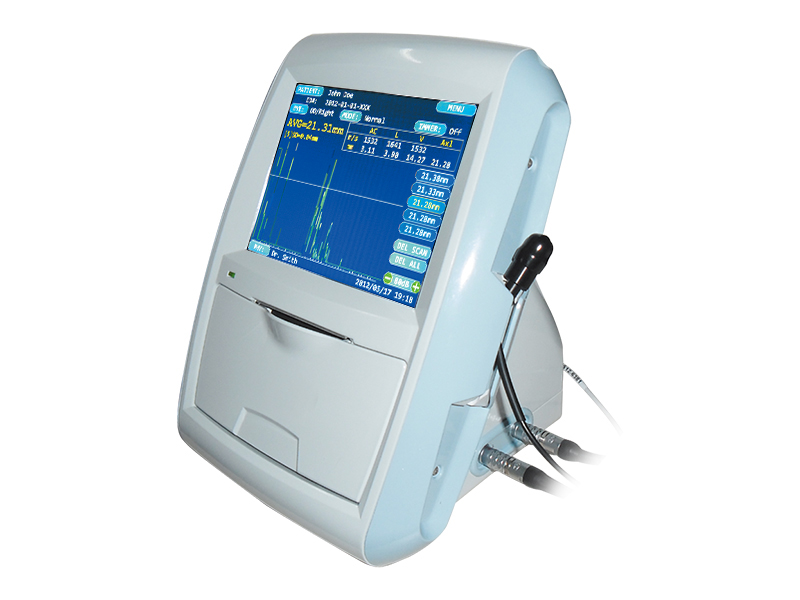
An ophthalmic A-scan pachymeter sends a short ultrasound pulse along the eye's axis and times the echoes that return from each interface. From one alignment it reports a set of distances along the optical axis, not a single value, and each number answers a different clinical question. Four of them carry the weight in daily practice.
The four numbers
Central corneal thickness (CCT). The distance between the tear film interface and the endothelium at the corneal apex. Adult values cluster between 500 and 550 µm, with a global weighted average near 544 µm and clear variation between populations. The periphery runs 10 to 30 per cent thicker, which is anatomy rather than pathology. CCT matters in glaucoma because applanation tonometry assumes a standard corneal rigidity: a thin cornea reads lower than the true pressure, a thick one reads higher. It matters before refractive surgery, where the residual stromal bed is the safety margin, and it matters in the follow-up of corneal oedema and endothelial disease.
Anterior chamber depth (ACD). From the corneal endothelium to the anterior lens capsule. Large series put the mean near 3.1 mm, with a normal spread from roughly 2.4 to 4.1 mm. A shallow chamber is the anatomical risk factor behind angle closure, and ACD is one input to intraocular lens power. After surgery it tells you whether the implant sits where the plan intended.
Lens thickness (LT). The anterior-to-posterior capsule distance. Mean values sit around 4.3 to 4.6 mm, and a dense cataract can thicken the lens toward 7 mm. LT feeds intraocular lens formulas, particularly in short and long eyes where the formula's assumptions are weakest, and it changes the arithmetic of chamber depth and vitreous length.
Axial length (AL). The full optical path from cornea to retina. The conventional reference is 24 mm; population studies report weighted averages near 23.5 mm with a standard deviation above 1 mm, because myopic eyes lengthen and hyperopic eyes shorten. AL is the dominant input in implant power, the endpoint in myopia progression, and the usual explanation for anisometropia.
Why the four belong together
The eye is a sum: corneal thickness, anterior chamber, lens and vitreous chamber add up to axial length. When AL looks unusual, the components show where the anomaly sits — a short eye with a thick lens is a different problem from a short eye with a shallow chamber. In eyes filled with silicone oil, or after cataract surgery, the velocity assumptions behind the vitreous segment change, and the reading needs the correction the unit's software provides. An error in AL moves implant power by a comparable amount, which is why the protocol below is not optional.
Five points that decide the reading
1. Align on the visual axis. The probe sits perpendicular to the corneal apex, and the patient fixates on the target. A tilted probe measures a chord rather than a thickness, and the error shows up in CCT before anything else.
2. Choose contact or immersion, then stay consistent. Applanation contact compresses the epithelium and reads thin; immersion avoids the compression but adds a probe-tip echo that has to be recognised. Mixing the two methods in one record produces numbers that cannot be compared.
3. Set the velocity per segment. Cornea, lens and vitreous do not conduct sound at the same speed, and the instrument's preset assumes a value for each. If the eye holds silicone oil or an implant, apply the correction rather than accepting the default.
4. Repeat and average. Three readings for pachymetry; for biometry, at least five consistent traces with a low standard deviation. Discard the outlier instead of averaging it in, and record both the mean and the spread.
5. Control the patient. Topical anaesthetic, no pressure on the globe, no squeezing, and a clean probe tip or sheath between eyes. For AL, measure both eyes; the comparison catches alignment errors a single eye hides.
What skews the number
Corneal oedema thickens the cornea; a contact lens or a recent epithelial injury distorts it; previous refractive surgery changes both thickness and rigidity. Blepharospasm and a patient who cannot fixate spoil alignment, a dense cataract lengthens the measured lens, and silicone oil distorts the vitreous segment. None of these are instrument faults, and all of them are reasons to write the technique into the report.
The scope
An ophthalmic A-scan pachymeter produces measurements; it does not produce a diagnosis. Slit-lamp examination, corneal topography and tomography, and fundus assessment answer the questions those numbers raise. Refer when the two eyes disagree in a way you cannot explain, or when a value falls outside the reference range for the population in front of you.
FAQ
Does the examination hurt?
A topical anaesthetic removes the sensation. Contact pachymetry feels like a light touch on the eye; immersion biometry feels like a small cup resting against the lids.
Is ultrasound pachymetry the same as optical pachymetry?
No. Optical methods and ultrasound differ by a few micrometres to about 10 µm depending on the device. Both are valid, and serial measurements should use the same method.
Can one device do pachymetry and biometry?
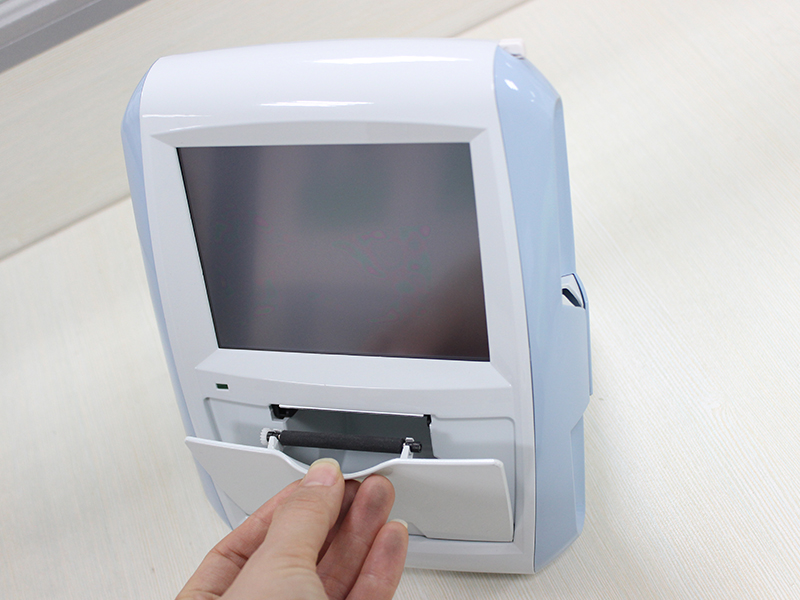
Many ophthalmic A/B consoles offer both, with pachymetry as a dedicated mode. Confirm the mode, the probe and the velocity presets on the unit you buy rather than assuming they are included.
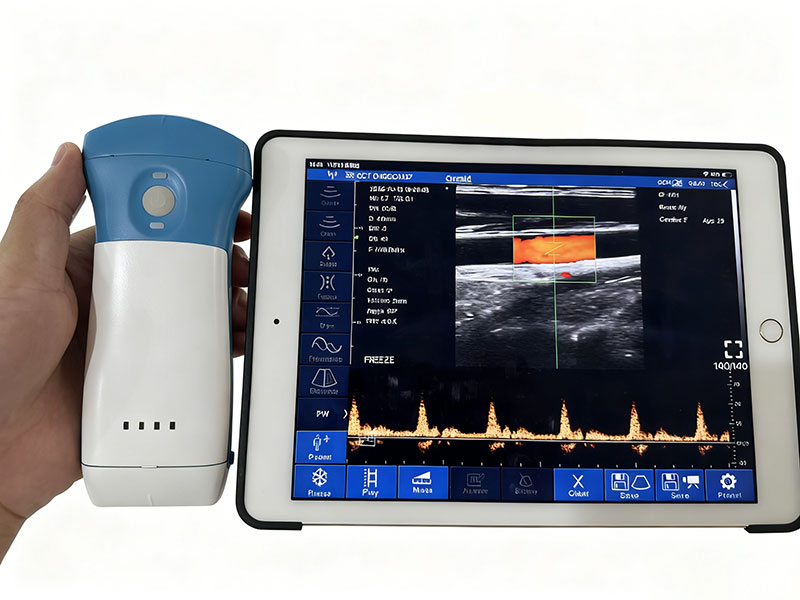
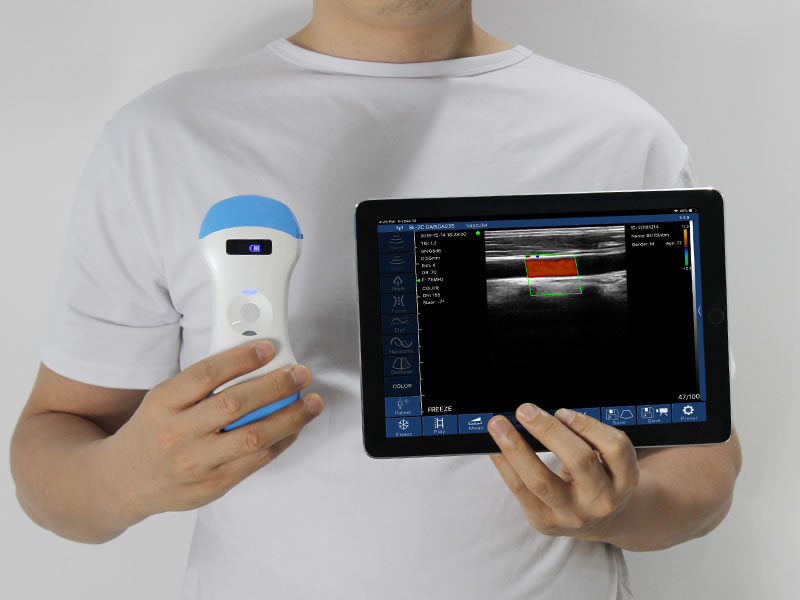
As a professional manufacturer, SonoStarMed provides high-quality mini color Doppler ultrasound with complete international certifications such as CE, FDA and ISO13485. Custom OEM and ODM services are offered for global distributors and medical institutions. Every device undergoes strict quality inspection before delivery to guarantee stable imaging quality and long service life.For any related needs or specific inquiries, please feel free to communicate: 18126862475.

 Home
 Product
 News
 Contact